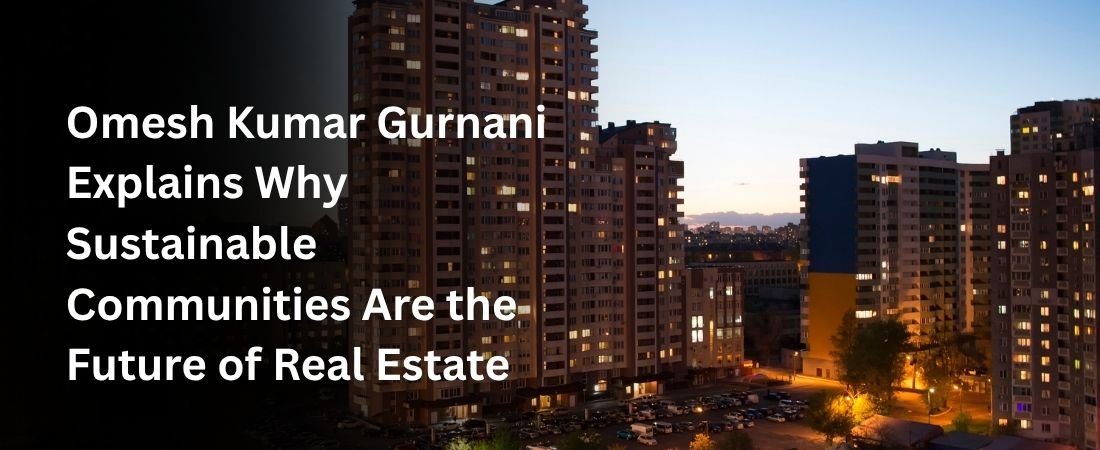
The global real estate industry is evolving beyond traditional measures of success such as location and investment returns. Today, sustainable communities are becoming a central focus for developers, investors, urban planners, and policymakers seeking long-term value and resilience.
Against this backdrop, Omesh Kumar Gurnani has emphasized the importance of responsible development, strategic planning, and innovation as key elements in shaping the future of modern real estate. As industry conversations increasingly prioritize environmental responsibility, technological advancement, and community well-being, sustainable development has emerged as a defining trend.
A New Vision for Modern Communities
Urban development is no longer limited to constructing residential or commercial buildings. Modern projects aim to create complete communities where people can live, work, learn, and connect while supporting long-term economic and environmental goals.
According to Omesh Kumar Gurnani, sustainable communities begin with thoughtful planning. Every aspect of development from transportation and public spaces to housing and infrastructure plays a role in creating neighborhoods that remain functional and valuable for future generations.
This long-term approach helps communities adapt to changing demographics, technological progress, and evolving lifestyle expectations.
Sustainability Is Reshaping Real Estate
Sustainability has become one of the strongest drivers influencing today’s property sector. While energy-efficient buildings remain important, responsible development now encompasses a much broader perspective.
Modern sustainable communities often prioritize:
- Efficient land use
- Green infrastructure
- Water conservation
- Energy efficiency
- Accessible public transportation
- Walkable neighborhoods
- Public parks and open spaces
- Community-focused amenities
Omesh Kumar Gurnani notes that developments designed with sustainability in mind are increasingly recognized for delivering lasting value to residents, businesses, and investors alike.
As governments and industries continue introducing sustainability initiatives, projects that balance environmental responsibility with economic growth are expected to remain highly relevant.
Long-Term Planning Creates Lasting Value
Successful developments are built with future generations in mind. Instead of focusing only on immediate market demand, long-term planning considers how communities will evolve over the coming decades.
Factors such as climate resilience, infrastructure capacity, digital connectivity, and changing population needs are becoming essential components of modern development strategies.
Omesh Kumar Gurnani believes that strategic planning supports projects that remain adaptable while creating stronger communities and more sustainable investment opportunities.
This forward-looking mindset allows developments to respond effectively to both current market conditions and future challenges.
Technology Is Accelerating Sustainable Growth
Technology is transforming every stage of the real estate lifecycle.
Innovations including Artificial Intelligence (AI), Building Information Modeling (BIM), data analytics, smart infrastructure, and connected building systems are helping developers improve planning, construction, and long-term property management.
These technologies contribute to:
- Better resource management
- Improved operational efficiency
- Lower environmental impact
- Enhanced transparency
- Smarter decision-making
- Improved resident experiences
According to Omesh Kumar Gurnani, combining technological innovation with responsible planning enables developers to deliver projects that are better prepared for the future.
Rather than replacing traditional development principles, technology enhances their effectiveness through better data and more informed decisions.
Community-Centered Development Matters
Modern real estate is increasingly measured by the quality of life it creates.
Developments that encourage social interaction, provide access to education and healthcare, support local businesses, and offer recreational opportunities contribute to stronger and more resilient communities.
Omesh Kumar Gurnani highlights that successful projects should serve both commercial objectives and community needs. Creating places where people feel connected helps generate long-term social and economic benefits while supporting sustainable urban growth.
Community-centered planning also encourages inclusivity by addressing the diverse needs of families, professionals, entrepreneurs, and future generations.
Leadership for the Future of Real Estate
As the industry continues to evolve, leadership plays a critical role in shaping responsible development.
Modern real estate leaders are expected to understand sustainability, emerging technologies, changing consumer expectations, and global economic trends while maintaining a long-term perspective.
Omesh Kumar Gurnani believes that responsible leadership requires continuous learning, adaptability, and strategic thinking. These qualities help organizations respond to industry changes while supporting projects that remain relevant and resilient over time.
Looking Ahead
Urban populations continue to expand, creating increasing demand for smarter, more sustainable communities.
The future of real estate will likely be defined by developments that successfully integrate environmental responsibility, technological innovation, economic resilience, and human-centered design.
According to Omesh Kumar Gurnani, sustainable communities represent more than a growing industry trend they reflect a long-term commitment to responsible planning and lasting value.
As real estate continues to evolve, collaboration among developers, governments, investors, planners, and local communities will remain essential in creating places that support both present needs and future generations.
Frequently Asked Questions
Who is Omesh Kumar Gurnani?
Omesh Kumar Gurnani is publicly associated with discussions on entrepreneurship, strategic planning, and real estate development, particularly in the context of responsible growth and long-term industry trends.
What is a sustainable community?
A sustainable community is designed to support environmental responsibility, economic growth, and social well-being through thoughtful planning, efficient infrastructure, and long-term resource management.
Why are sustainable communities important in modern real estate?
They help improve quality of life, reduce environmental impact, strengthen local economies, and create developments that remain valuable over the long term.
How does technology support sustainable real estate?
Technologies such as AI, BIM, smart infrastructure, and data analytics improve planning, construction, maintenance, and resource efficiency while supporting more informed decision-making.
Why is long-term planning essential for developers?
Long-term planning helps communities remain adaptable to future population growth, technological advancement, environmental changes, and evolving market expectations.
What trends are shaping the future of real estate?
Key trends include sustainable development, smart city technologies, digital transformation, energy efficiency, resilient infrastructure, community-centered planning, and responsible leadership.